


Stop failed deliveries this holiday season: A data-first playbook for Aussie eCommerce
Thu, 27th Nov 2025
The holiday rush is a make-or-break moment for Australia's online retailers - and in 2025, customer expectations for fast, flawless delivery are higher than ever. But every returned package, delayed shipment, or undelivered order quietly eats into margins and customer trust. The good news? Most failed deliveries are preventable.
By treating customer contact data as a strategic asset - validating addresses at checkout, verifying emails and phone numbers, and running simple pre-shipment checks - merchants can cut failed deliveries dramatically without expensive systems or complex integrations.
This guide gives Australian eCommerce teams a practical, step-by-step playbook: fast wins you can implement in days, operational checks for your fulfilment team, and the KPIs that measure true impact. If you're preparing for BFCM, Christmas, or post-holiday sales, these data-first moves will protect revenue and deliver happier customers.
The Silent Profit Killer: How Bad Addresses Drain Your Bottom Line
Every eCommerce retailer - no matter the size - has felt the hidden toll of failed deliveries: returns, reshipping costs, customer complaints, and even the loss of a once-loyal shopper. Industry research consistently shows that a large portion of delivery failures come from inaccurate or incomplete address information collected at checkout.
A single error - a missing unit number, misspelled street name, or incorrect postcode - triggers a chain reaction. The parcel is returned, couriers add handling fees, fulfilment teams scramble to contact customers, and delivery timelines are blown out. During peak holiday periods, these small errors quickly multiply.
Then comes the reputational cost. Delivery-related complaints are among the top contributors to negative reviews, and merchants often end up absorbing shipping or redelivery fees to protect customer relationships. Fortunately, most of these issues can be prevented long before the order reaches the warehouse.
Your First Line of Defence: Integrating Address Validation at Checkout
Address validation - or address verification - ensures a shipping address is real, complete, and deliverable before the order is finalised. Modern validation systems cross-check customer input with authoritative postal databases, such as Australia Post's PAF, confirming street names, house numbers, suburb–postcode alignment, and more.
Why it matters:
- Higher first-attempt delivery success
Validated addresses dramatically reduce failed or mis-delivered parcels. - Lower shipping & redelivery costs
Preventing courier rejections protects your margin - especially in high-volume months. - Better customer experience
A smooth, on-time delivery fosters loyalty. One failed delivery can overshadow an otherwise great shopping experience. - Reduced checkout friction
Autocomplete and real-time validation speed up checkout and reduce manual errors.
In short: address validation turns delivery - a major pain point - into a competitive advantage.
A 3-Step Data-First Playbook for Holiday Readiness
Below is a simple, actionable framework your team can implement immediately, especially ahead of Black Friday, Cyber Monday, Boxing Day, and Christmas.
1. Validate at Point of Entry (Checkout)
- Realtime address autocomplete
Suggest streets, suburbs, and postcodes as customers type. This prevents typos and incomplete entries. - Address verification API
Check each submitted address against authoritative postal data. If something looks wrong, prompt customers to fix it instantly. - Email & phone verification
Incorrect contact details lead to missed confirmations, tracking notifications, and delivery updates - all of which heighten customer frustration.
Pro Tip:
Melissa's real-time Address Verification APIs validate customer information instantly, ensuring accuracy from the moment it enters your system.
2. Pre-Shipment & Fulfilment-Level Checks
Even with checkout validation, a second layer of quality control helps catch lingering issues - especially for high-priority or high-value orders.
- Batch cleansing before peak periods
Run bulk validation of your CRM, loyalty lists, and pending orders. - Cross-border shipment formatting
International addresses follow different rules. Validate before printing labels to avoid customs or carrier rejections. - Courier-standard formatting
Ensure unit numbers, building names, and abbreviations meet courier expectations.
Pro Tip:
Melissa's Clean Suite performs large-scale data cleansing, removing incomplete or outdated addresses before they cause fulfilment delays.
3. Monitor KPIs & Build Continuous Feedback Loops
To measure the real impact of validation, track:
- First-attempt delivery success rate
- Failed delivery or redelivery rate
- Cost per failed delivery
- Delivery-related complaints
- Refunds or reshipments caused by incorrect addresses
Comparing these KPIs before and after implementing validation often reveals striking improvements in efficiency, cost savings, and customer satisfaction.
Why This Matters Especially for the Australian Market
Australia's geography presents unique challenges: long delivery routes, huge variations in population density, and suburb–postcode combinations that differ widely across states. A small error - such as a missing apartment number in Sydney or a misspelled suburb in regional VIC - can cause complete delivery failure.
For regional and remote communities, the stakes are even higher. Redelivery costs increase, delays stretch longer, and courier consolidation points become bottlenecks. With online shopping continuing to surge, especially during the holiday season, accuracy at checkout is no longer optional - it's essential.
A validated, frictionless checkout protects customer trust and ensures every parcel has the highest chance of arriving safely and on time.
Beyond Packages: Data Quality as a Strategic Advantage
High-quality address and contact data doesn't just reduce failed deliveries - it strengthens the entire customer lifecycle:
- Lower freight and return costs → healthier margins
- Smoother deliveries → stronger customer loyalty
- Clean data → better marketing, segmentation, and analytics
- Fewer delivery complaints → stronger brand reputation
Data quality has moved from a back-office function to a strategic differentiator. Retailers that prioritise clean customer data consistently outperform those who don't.
How to Get Started: A Minimalist Implementation Plan (Under a Week)
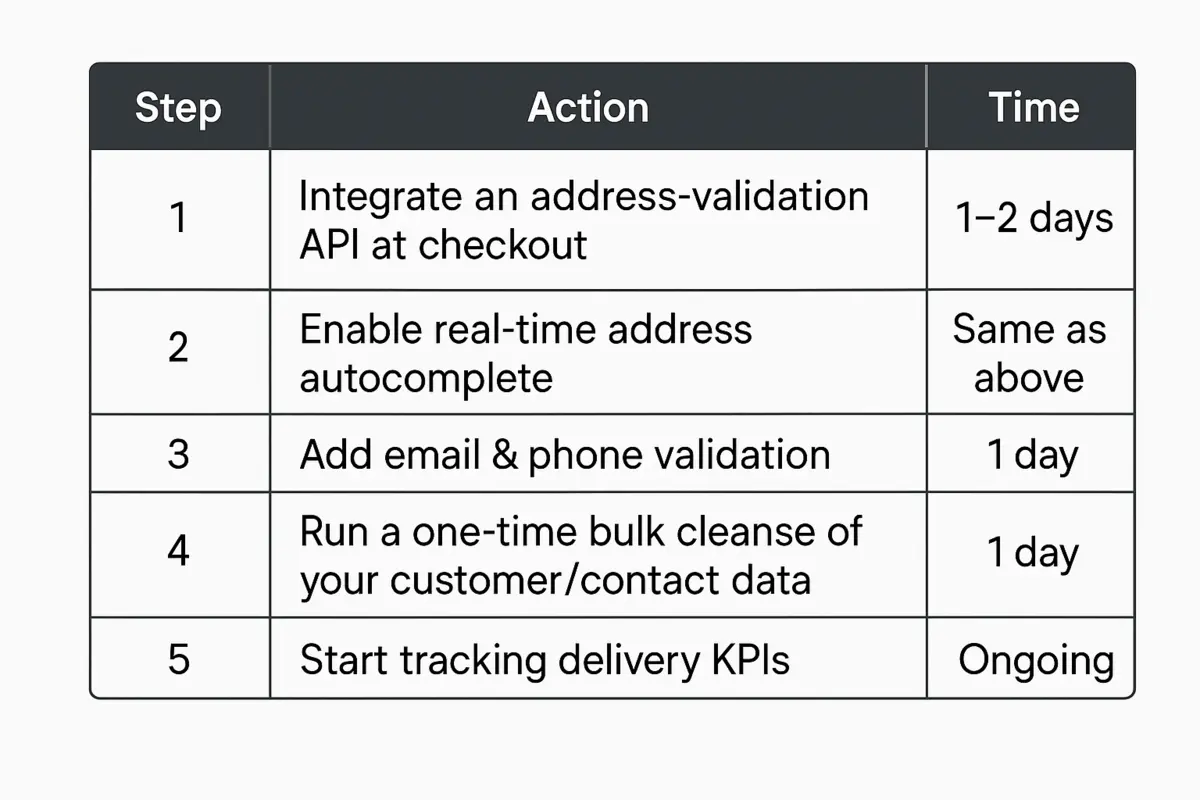
Even with limited resources, this plan can significantly reduce failed deliveries before the holiday peak hits.
Final Word: Validation Is Not a Nice-to-Have. It's a Must.
As online shopping volumes surge, failed deliveries quietly erode profits, strain fulfilment teams, and frustrate loyal customers. But most of these failures are preventable.
By embedding address, email, and phone validation into your checkout and fulfilment workflows, Australian retailers can dramatically improve delivery performance, protect margins, and build lasting customer trust.
Ready to stop failed deliveries before they happen?
Partner with Melissa to build a bulletproof data-quality strategy this holiday season - and deliver exceptional customer experiences when it matters most. Learn More.