

Christchurch startup seeo launches AI workplace safety tool
Fri, 15th May 2026
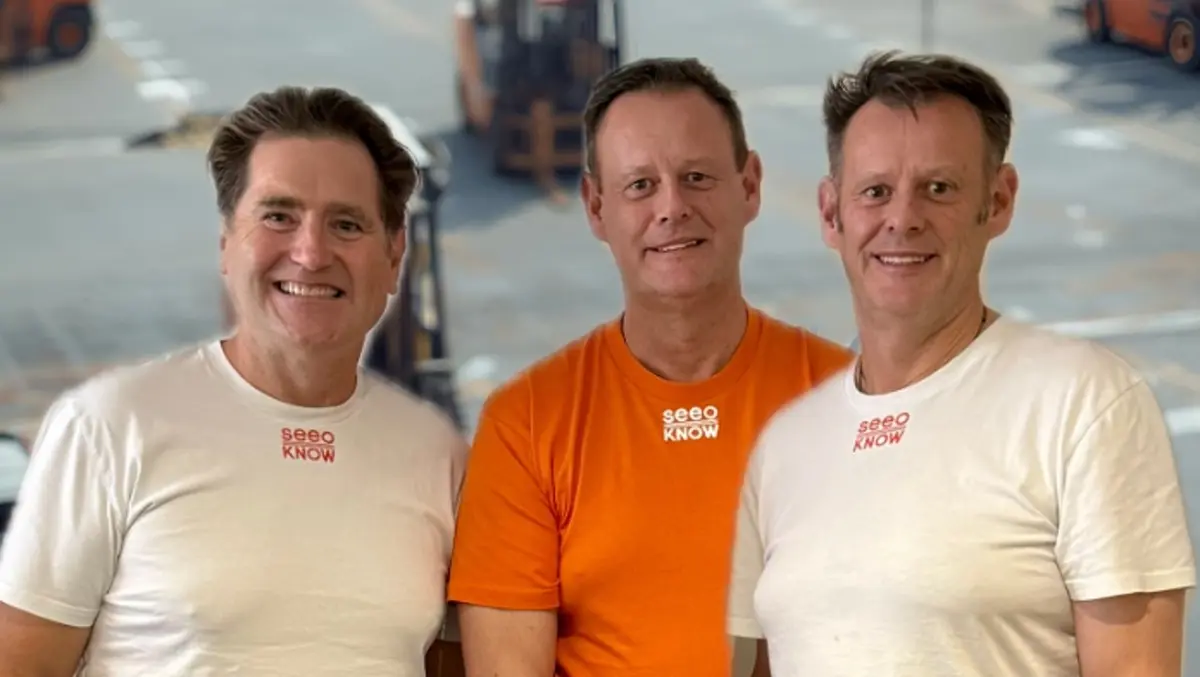
Dean Marris, Craig Marris and Bede Cammock-Elliott have launched workplace intelligence platform seeo in Christchurch, targeting organisations across Australia and New Zealand.
The platform uses existing security camera systems to analyse workplace activity in real time. It is designed to identify unsafe acts, near misses and departures from standard operating procedures at sites such as yards, warehouses and industrial facilities.
The launch brings together executives with extensive experience in telematics and fleet technology. Dean Marris and Craig Marris previously founded Coretex and later held leadership roles at EROAD, while Cammock-Elliott is a co-founder of seedigital.
seeo is entering a market where employers face growing scrutiny over workplace safety, governance and worker wellbeing. Regulators across Australasia have also sharpened their focus on critical risk management, psychosocial hazards and real-time accountability, increasing pressure on businesses that still rely heavily on incident reports and retrospective reviews.
The system is intended to help operators compare live activity with established procedures, giving managers a view of how work is actually carried out rather than how it is described in policy documents, training materials or formal processes.
Dean Marris said the founders want to address a system that remains largely reactive.
"Safety today is still built around hindsight," said Dean Marris, co-founder of seeo.
"By the time something is reported, the risk has already materialised, and that's the gap we set out to close. seeo brings safety into the present by making work visible in real time."
Founders' focus
The venture reflects an effort to extend monitoring beyond vehicles and fleets into broader operational settings. The founders' earlier work in telematics focused on tracking assets and driver activity, while seeo is aimed at workplace environments where people, machinery and vehicles interact.
Craig Marris said the shift came from a broader view of operational visibility.
"We've spent years helping organisations understand what their vehicles are doing," said Craig Marris, co-founder of seeo.
"Now we're helping them understand what's happening across their operations in real time.
"A core challenge for many organisations is the disconnect between work as imagined - policies, procedures, and training - and work as done on the ground 24/7, 365 days a year."
The product is intended for sectors including transport, logistics, manufacturing, warehousing, construction and other industrial operations. In those settings, it is designed to give businesses a way to observe loading, movement, handling and process compliance as they happen.
seeo also presents the system as a tool for workflow measurement as well as safety oversight. Users can monitor operational consistency, identify inefficiencies and assess whether tasks are being completed in line with expected processes.
Operational visibility
Cammock-Elliott said many organisations do not lack written rules, but direct insight into day-to-day work.
"Organisations don't lack policies, they lack visibility," said Bede Cammock-Elliott, co-founder of seeo.
"When you can see how work is actually done, you unlock the ability to improve both safety and performance."
seeo said it has already begun operations and is working with partners in Australasia and the United States. That early activity suggests the founders are building on contacts from previous ventures and testing demand beyond their home market from the outset.
The company also sees the commercial opportunity as extending beyond incident prevention into broader operational oversight. Dean Marris framed that wider pitch in terms of making everyday work more observable.
"This is about more than preventing incidents," said Dean Marris. "It's about making work visible, and once work is visible, it becomes safer, smarter, and more productive."