

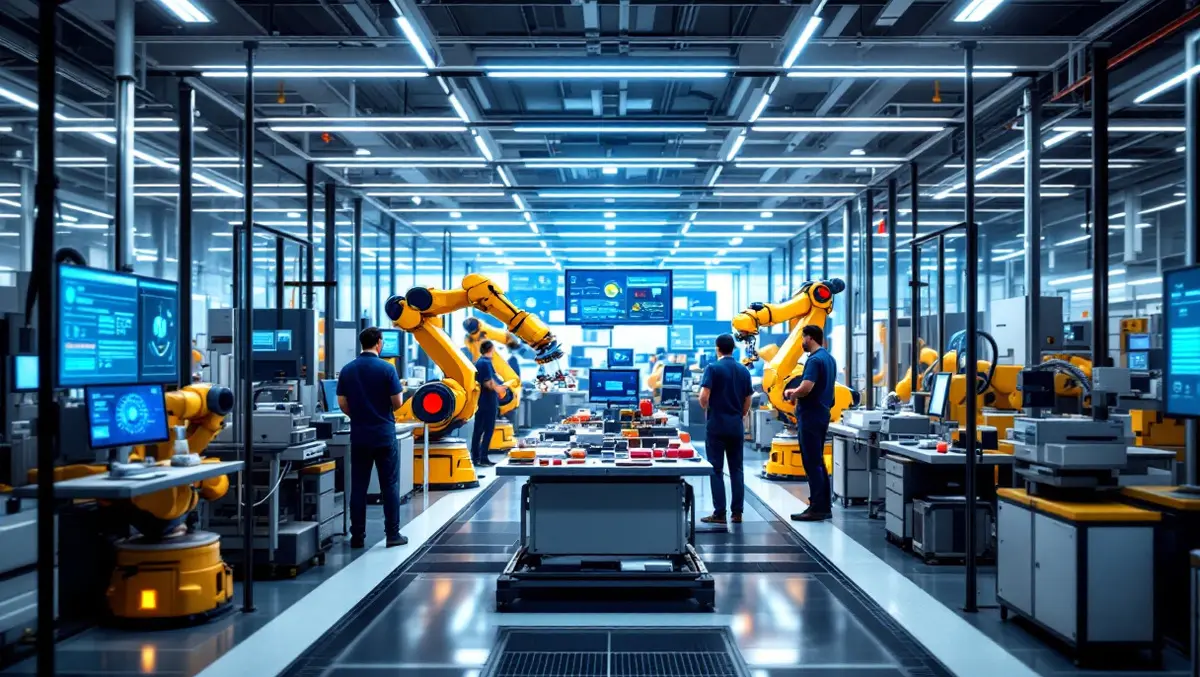
Future made in Australia: Reimagining manufacturing as a catalyst for national prosperity
Thu, 2nd Oct 2025
World Manufacturing Day is a timely reminder of the transformative power of industry. In Australia, manufacturing has long played a key role in the nation's economy - employing over 930,000 people and contributing $137 billion in value-added output. Yet, as we stand at the crossroads of global disruption and technological acceleration, the sector's role is being redefined - not just as a producer of goods, but as a driver of innovation, resilience, and national capability.
The Australian government's "Future Made in Australia" initiative signals a bold shift in industrial policy. It's a call to rebuild sovereign capability, strengthen supply chains, and invest in the technologies and talent that will shape our future. For manufacturers, this is a call to action to lead the way in creating a more complex, competitive, and sustainable economy.
Manufacturing as a strategic asset
Australia's manufacturing sector is undergoing a quiet revolution. Once seen as a sunset industry, it is now emerging as a strategic asset in the nation's economic portfolio. According to the Australian Industry Group, manufacturing accounts for 12.4% of exports and nearly 8% of capital investment, underscoring its potential to drive productivity, diversify the economy, and reduce reliance on volatile global markets.
However, the sector faces persistent headwinds. Rising energy costs, supply chain fragility, and a widening skills gap threaten to stall progress. The Australian Bureau of Statistics reports that job vacancies in manufacturing rose by 8.2% year-on-year, with many roles - particularly in robotics, data analytics, and CNC machining - facing a talent shortage with roles remaining unfilled for months.
To meet and overcome these challenges, manufacturers must be supported to invest in advanced technologies, build resilient logistics networks, and form deeper partnerships with education providers. Simulation-based training, virtual reality tools, and targeted government grants can help bridge the skills gap and prepare the workforce for the sector's evolving demands.
Innovation as a competitive advantage
Innovation is no longer optional - it's the currency of competitiveness. Australian manufacturers are increasingly adopting Industry 4.0 technologies such as AI, automation, and additive manufacturing to boost efficiency and agility. ContiTech has invested approximately $220 million into digitalisation and Industry 4.0 production capabilities globally, covering the deployment of intelligent systems, sensor-based technologies, and predictive maintenance platforms across its industrial operations. These tools are designed to improve uptime, safety, and cost efficiency - not only in manufacturing, but also in sectors like mining, energy, and mobility.
Green manufacturing is also gaining momentum. From carbon-fibre wheels to advanced hearing implants, Australian companies are demonstrating that sustainability and innovation can go hand in hand. Our company's work developing hydrogen-compatible materials and fuel-cell applications is supporting critical industries in markets like Australia to create and achieve strong net-zero ambitions.
Yet, innovation must be inclusive. Many SMEs struggle with the cost and complexity of digital transformation. Without targeted support, they risk being left behind. Australia's National Reconstruction Fund and the Modern Manufacturing Strategy are steps in the right direction, working to ensure that the potential of Industry 4.0 innovation reaches every corner of the sector.
Resilience through localisation
The pandemic exposed the fragility of global supply chains not just in Australia, but across the world, and the Future Made in Australia initiative is a bold step pushing businesses to reshore operations, diversify suppliers, and invest in predictive analytics to anticipate disruptions. This shift toward localisation is not just about risk mitigation - it's about building economic resilience.
Supply chain reliability is now a strategic imperative. Real-time communication platforms, flexible logistics networks, and domestic sourcing are helping manufacturers maintain continuity in the face of geopolitical and environmental shocks. These investments are laying the groundwork for a more self-reliant industrial base.
Workforce transformation and economic complexity
Manufacturing is a people-powered industry. As automation redefines traditional roles, the need for workforce engagement and upskilling becomes more urgent. Tools like augmented reality for training and intuitive shopfloor dashboards are improving morale and productivity, but technology alone is not enough.
Australia must lift its economic complexity by investing in the manufacturing intensity of its economy. The Federal Industry Minister Tim Ayres recently noted, the decline in manufacturing over the past 25 years has had a parallel impact on productivity growth, and reversing this trend requires a renewed focus on R&D, skills development, and industrial capability.
The National Skills Agreement and other workforce initiatives are helping align training with industry needs. But more collaboration is needed between government, industry, and academia to ensure that the next generation of workers is equipped to thrive in a digitally enabled manufacturing environment.
A shared vision for World Manufacturing Day
World Manufacturing Day is not just a celebration - it's a call to action. It invites us to reimagine manufacturing as a catalyst for national prosperity. By investing in innovation, building resilient supply chains, and empowering our workforce, we can unlock the full potential of this vital sector.
Australia's manufacturing future will be shaped by the choices we make today. With the right policies, partnerships, and mindset, we can build an industry that is not only globally competitive but also locally empowering. A future made in Australia is a future worth investing in.