Biodiversity stories
Felix mobile counters the belief of 88% of Australians that sustainable choices are pricier by expanding into Coles supermarkets.
United Nations World Wildlife Day highlights the crucial role of digital innovation in enhancing animal conservation efforts, as demonstrated by IAR's partner YIARI's forest protection project in Indonesia.
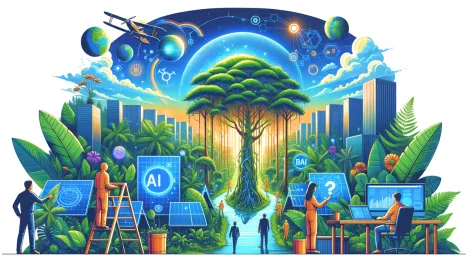
NTT Group and ClimateForce collaborate to create the world's first Smart Rainforest, using AI and data analytics to restore Australia's damaged Daintree Rainforest.
In a novel move towards environmental sustainability, NTT Group collaborates with ClimateForce to regenerate Australia's Daintree Rainforest, creating the world's first 'Smart Rainforest'.
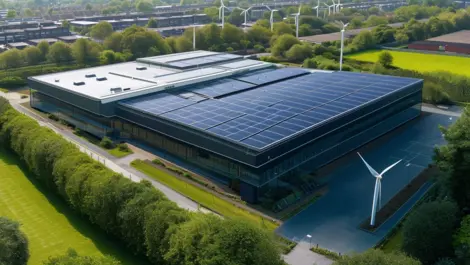
CyrusOne builds fifth data centre in Frankfurt, marking expansion in Europe's data capital and rejuvenating Hanau's industrial site.
Google Australia and QUT advance biodiversity monitoring, implementing AI-detecting the sounds and songs of wildlife.
Shifting to circular models could help New Zealand and Australia close emissions gaps, cut waste and create jobs in infrastructure and construction.
Yondr Group wins approval for a third data centre on its London campus in Slough. It aims for a 100+MW capacity and eco-friendly features.
Skygard's state-of-the-art data centre in central Oslo is set to revolutionise the sector, combining high security with environmental sustainability and urban regeneration.
AI investment in the UL set to double with a £100m boost, targeting healthcare, environmental protection, and national security sectors.
Experts warn the proposed fast-track regime could cut community input and leave major projects with weaker environmental scrutiny.
In civil construction, the concept hinges on system boundaries, with finite resources, waste and carbon shaping whether projects can endure.
Urban trees and gardens are shrinking as intensification raises heat, flooding and liveability risks for New Zealand’s cities.
Policy change, fuel resilience and green power projects are set to dominate infrastructure again as reform timelines tighten in 2023.
A parliamentary report says spending over GBP £2 billion a year on the environment is poorly linked to outcomes and lacks transparency.
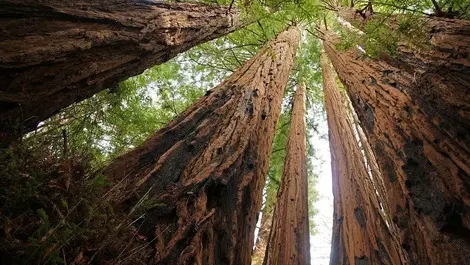
Redwood could help New Zealand meet its 2050 net-zero target by storing more carbon than radiata pine on suitable sites.
A report warns New Zealand is missing harmful chemicals in the environment because monitoring is patchy and data on use is scarce.
Critics warn the draft overhaul could leave consenting slower and housebuilding harder, despite ministers promising a leaner planning regime.
Poorly planned tree planting could raise emissions and damage biodiversity unless projects protect existing forests and suit local conditions.
Plants could stop buffering a third of human emissions within 20 years, making climate change harder to slow as warming rises.