

WA police face backlash over live facial recognition
Thu, 25th Jun 2026
Electronic Frontiers Australia has criticised the Western Australia Police Force's use of live facial recognition in public spaces, describing it as an Australian first.
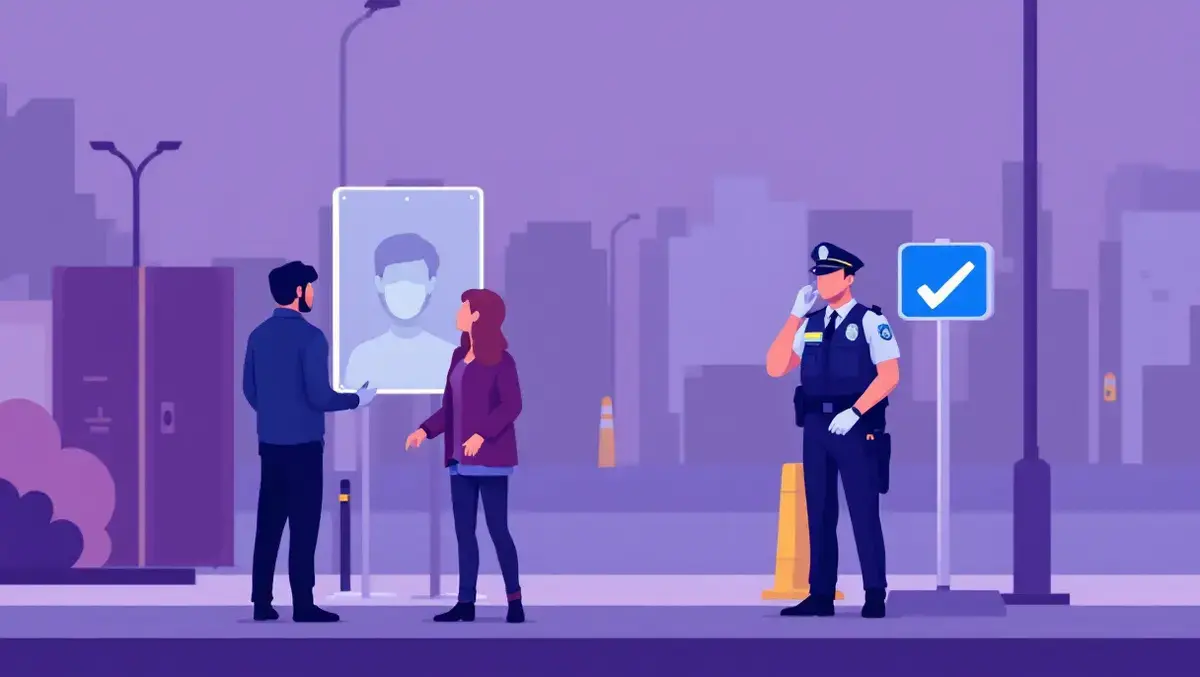
The technology is being used from a marked police van outside major events and in crowded areas, scanning the faces of people walking past in real time. The deployment has raised concerns among privacy and digital rights advocates about consent, oversight and the handling of biometric data.
Biometric information in Western Australia is covered by separate privacy frameworks for the private and public sectors. The private sector is regulated by the Commonwealth Privacy Act 1988, while the state public sector falls under the Privacy and Responsible Information Sharing Act 2024, with its main Information Privacy Principles due to begin shortly.
Electronic Frontiers Australia said biometric data and templates are classed as sensitive information under both regimes. That status, it argued, requires strict consent for collection, privacy impact assessments for high-impact uses, and limits on automated decision-making.
Key objections
The organisation is asking whether WA Police consulted the WA Information Commissioner before deploying the system, how express consent is being collected from members of the public, and whether a mandatory Privacy Impact Assessment has been completed and published. It is also questioning whether police have shown that scanning faces in public is necessary and proportionate, and whether a human rights impact assessment has been carried out.
It also raised the timing of the rollout in relation to the state privacy rules, asking whether police are relying on the fact that the WA Information Privacy Principles have not yet taken effect.
At the centre of the dispute is whether people in public can be subjected to real-time biometric scanning without clear notice or consent. The issue has become more contested as police and government agencies test automated identification systems in public settings.
Electronic Frontiers Australia used unusually strong language in its response. "This is an outrageous act of police overreach and a fundamental breach of our individual and collective human and digital rights," the organisation said.
Accuracy concerns
The organisation also pointed to long-running technical criticism of facial recognition systems, including questions about error rates, data quality and bias. It said audited field data from live police deployments is often not publicly available, making it difficult to assess how often systems misidentify people in real-world use.
It cited testing by the US National Institute of Standards and Technology, which has found that facial recognition algorithms can produce higher false-match rates for women, younger people and people with darker skin tones. In a policing context, critics argue those error patterns can increase the likelihood of wrongful stops, detention and questioning for minority groups.
Electronic Frontiers Australia also argued that even a low false-positive rate can produce a significant number of mistaken alerts when large crowds are scanned. Using the example of 100,000 people passing through a transport hub or major event, it said a 0.1% false-positive rate would still generate 100 false alarms.
That means a system's practical effect can differ sharply from its headline accuracy figure. If police act on live alerts in dense public settings, the number of innocent people flagged could become a central civil liberties issue rather than a technical footnote.
The debate in Western Australia mirrors broader international arguments about the use of real-time remote biometric identification by law enforcement. Electronic Frontiers Australia pointed to the European Union's AI Act, which restricts one-to-many biometric identification and real-time remote biometric identification in public spaces for law enforcement except in narrow circumstances and with judicial approval.
The organisation said human rights considerations are built into those assessments overseas and argued that a similar approach appears to be missing in Western Australia.
WA Police Commissioner Blanch has defended the technology's use, saying: "This is actually a way that we can increase the freedoms and the privacy of our community."
John Pane, chair of Electronic Frontiers Australia, rejected that argument. "If this is the way WA Police Commissioner helps improve the privacy and freedoms of Western Australians, we would hate to see what he would do to damage those two critical human rights," Pane said.
Pane also warned that biometric surveillance could expand if governments do not impose tighter limits on when and how it can be used. "What we are talking about is a massive breach of human rights and privacy and one which could increase in scope and scale in the absence of strong laws to limit the use of biometric technologies in public and private spaces. The use of real time biometric image matching in public spaces by WA police really is the cherry sitting on top of the surveillance state cake," Pane said.