

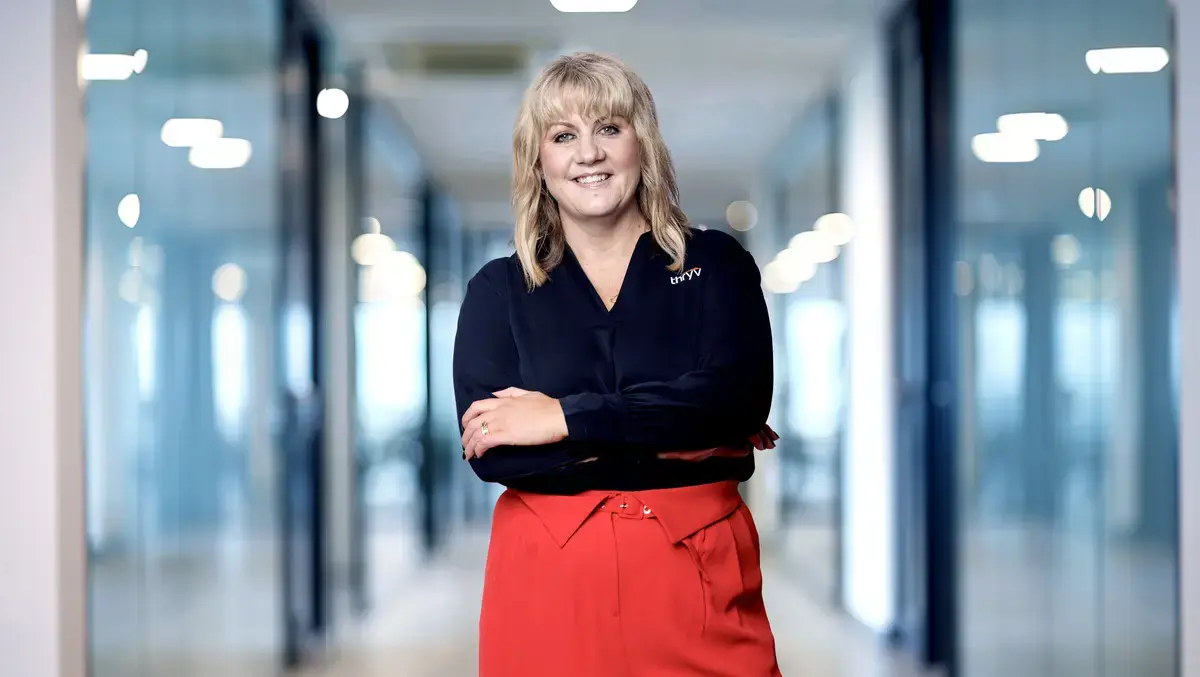
Thryv says AI is redefining women’s tech leadership
Mon, 28th Sep 2026.webp)
Thryv is urging businesses to broaden how they define technology leadership for women in small and medium-sized companies. Its Australia and New Zealand head says artificial intelligence is highlighting technology expertise built through customer, operational and revenue roles.
Elise Balsillie, Head of Thryv Australia and New Zealand, said many women are gaining practical technology experience outside conventional IT or product roles as software and automation become part of day-to-day business management.
She said AI tools are moving technology decisions closer to frontline business roles. In smaller companies, the people selecting systems or adjusting workflows are often also responsible for customer service, team management and sales.
Balsillie argued that shift is changing who should be seen as a technology leader. Rather than focusing only on formal job titles, employers should look at the work people have led, the systems they have introduced and the change they have managed.
"A job title tells you where someone sits in a business. The work they have led tells you far more about their technology capability," Balsillie said.
"Technology has several front doors. Some women enter through product or data. Others build their expertise by solving business problems with technology, introducing new ways of working and leading people through change. We need to become better at recognising technology leadership wherever that experience is being built."
AI at work
Thryv cited findings from its 2025 Business Index and Consumer Report showing that 59 per cent of Australian SMBs and 56 per cent of New Zealand SMBs already use AI. The figures point to how quickly these tools have entered routine business operations across both markets.
For small businesses, those decisions can include how enquiries are handled, how information moves between systems, which tasks can be automated and where staff judgement should still take precedence. Balsillie said those choices affect customer experience, team workload and operating efficiency at the same time.
"AI is bringing technology decisions into roles that may never have been described as technology roles," Balsillie said.
"A business owner may now be deciding how an enquiry is handled, how customer information moves between systems, which tasks should be automated and where human judgement should remain part of the process. These decisions can directly affect the customer experience, the workload of the team and how effectively the business operates."
She linked that development to a wider opportunity for women whose careers have been built in customer-facing, operational or commercial functions. In her view, those backgrounds can offer a grounded understanding of where technology helps and where it adds friction.
"Women who have spent years understanding customers, managing teams or improving how a business operates can bring a valuable perspective to technology leadership because they understand what needs to work in practice," Balsillie said.
"My own pathway taught me to start with the outcome. Where is information being lost? Which process creates friction? What could technology do better and where does human judgement add greater value? The strongest technology decisions connect what a system can do with what the business, its people and its customers actually need."
Different pathway
Balsillie's career has covered media, education, revenue and digital transformation, reflecting the kind of cross-functional route she says is becoming more relevant as technology spreads across business operations. She argued that small companies, in particular, can act as training grounds for a different kind of technology leader.
In these environments, the effects of digital decisions tend to show up quickly. A clumsy platform can slow responses to customers, while a better process or automation can remove repetitive administrative work within days.
A disconnected system can also create manual work for staff already juggling several responsibilities. That can make technology choices more visible and more consequential than in larger organisations, where decisions may be made further from day-to-day operations.
"In a small business, you see the impact of a technology decision almost immediately," Balsillie said.
"You know quickly whether a system makes work easier, improves the customer experience or simply creates another task. That experience teaches people to look beyond the technology itself and understand how it affects customers, workflows and the wider business."
She said responsibility for technology often develops informally. A staff member managing customer relationships may introduce a CRM system, improve automated follow-up processes or help shape how AI is used across the company without ever holding a formal technology title.
That, she said, creates a wider pool of potential leaders whose experience is rooted in implementation and measurable business results. Businesses looking to build stronger leadership pipelines may need to look beyond standard technology career paths.
"Look at the complexity someone has managed, the decisions they have made, the change they have led and the results they have delivered. Can they understand what the technology can do, challenge how it should be applied, bring people with them through change and connect an investment to a meaningful business result? For many women, those skills are already being developed in the roles they hold today."
Recognition gap
Balsillie said companies can support that progression by giving women direct responsibility for significant digital projects, including AI-driven processes, customer workflow changes or new platform roll-outs. She said practical accountability matters more than labels in building recognised technology leadership.
About 100,000 businesses globally use Thryv's software. Balsillie said the next generation of women technology leaders may already be working in small businesses where technology, customer interaction and operational decision-making increasingly overlap.
"Give women responsibility for technology initiatives that carry real weight and allow their results to speak," Balsillie said.
"The next generation of women technology leaders may already be running small businesses, leading customer teams or improving operations. Technology leadership is changing because technology now sits inside customer conversations, workflows and growth decisions. When we recognise the expertise being built through that work, we create stronger pathways for women while giving small businesses access to leaders who understand both the technology and the business it needs to serve."