


Humanix has launched Complete Call Context for service desk voice security, designed to identify suspected social engineering during sensitive account requests.
The San Francisco company says the feature links service desk calls with identity and ticketing records, allowing security teams to compare what a caller says with information held in internal systems. It focuses on requests such as password resets and multi-factor authentication changes, where a fraudulent caller may try to exploit standard support processes.
Voice-based social engineering has drawn more attention as attackers increasingly target help desks to gain account access. Humanix cited industry research showing vishing has become one of the most common initial routes into an organisation and that its use in intrusions has risen sharply this year.
Many of these attacks rely on impersonation, urgency and pressure to persuade staff to bypass checks. Once an account change is made, the event can appear routine in identity logs because the phone conversation that prompted it often leaves little direct evidence for investigators to review.
How It Works
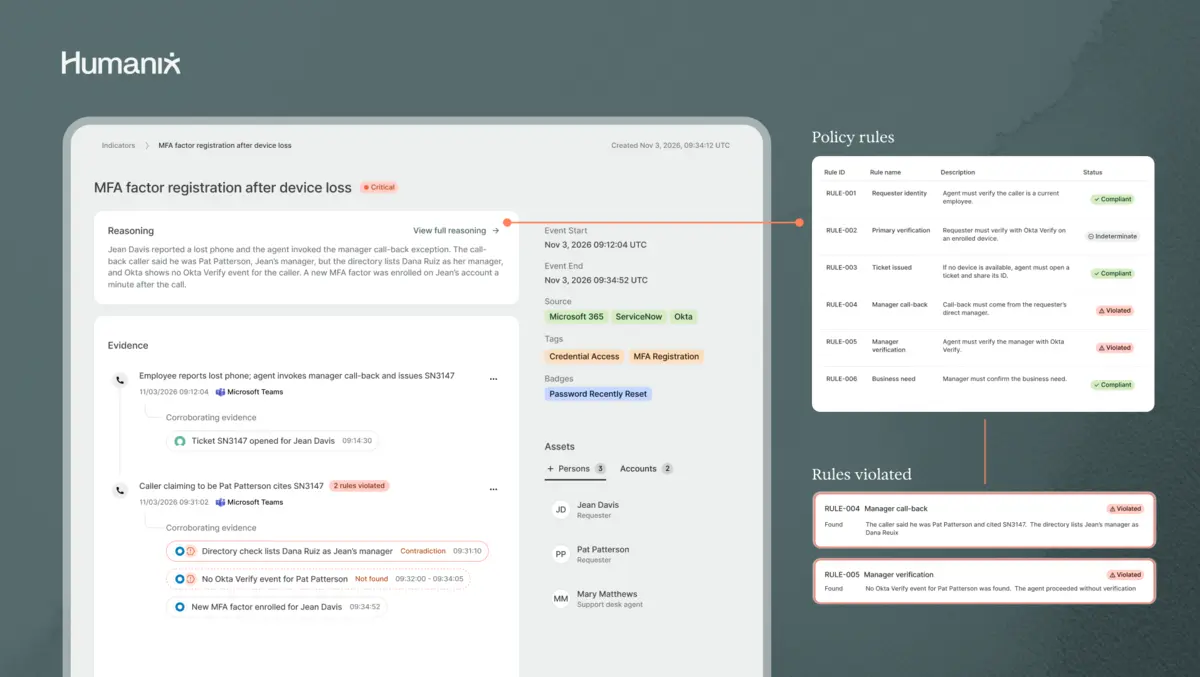
Humanix says Complete Call Context creates a micro-agent for each sensitive service request. The micro-agent examines the details of the call, identifies what information is required under the organisation's own procedures and checks the call against records in identity provider and IT service management systems.
If the evidence does not match the caller's claims, the system generates an alert with a severity rating and a plain-language explanation of the discrepancy.
One example provided by Humanix involves a caller asking the IT help desk to reset an employee's multi-factor authentication on the basis that they manage that employee. If internal identity records show a different manager, the cited ticket number does not exist in the IT service management system and there is no record of earlier identity verification, the system would flag the request as conflicting with established procedures.
This is intended to reduce the need for analysts to reconstruct an incident from separate records across IT and security teams. Each alert is meant to bring together the contents of the call, the account change itself and the supporting evidence behind the finding.
Growing Pressure
Service desks have become an attractive target because they sit at the point where employees, contractors and administrators request access changes. A convincing phone caller can exploit that position to hijack normal support workflows, particularly when the request concerns a locked account or a change to authentication settings.
Humanix argues that conventional controls that act only after a call may be too late when attackers can move quickly from a successful conversation to a broader compromise. By checking the substance of the call against systems of record during the process, organisations can identify suspicious requests before they develop into wider incidents, it says.
"AI-assisted attackers can now go from a single phone call to a full compromise in minutes," said Keith Stewart, Founder and Chief Executive Officer, Humanix.
"Controls that only engage after the call can't keep up. Humanix analyzes the call as it happens, at the first step of the attack. Complete Call Context carries that view into the systems of record to catch those attackers at the point of insertion," Stewart said.
The product is available now to Humanix customers. The company is backed by Acrew Capital, Boldstart Ventures and Evolution Equity Partners.