

CommBank rolls out Microsoft-built customer service AI
Fri, 10th Jul 2026
Commonwealth Bank has rolled out a customer service platform built with Microsoft to support the retail customer experience centre at Australia's largest bank.
The system handles more than two million conversations a month across voice and messaging channels, replacing a patchwork of legacy systems with a single platform.
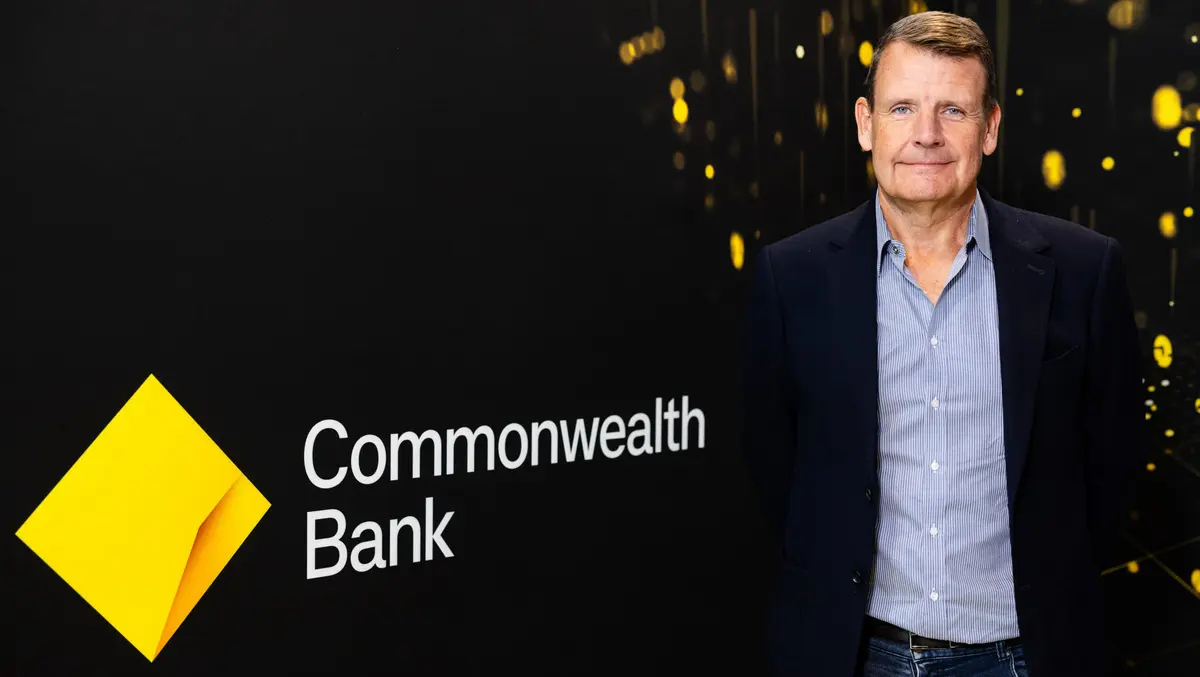
Martin Lindsay, Executive General Manager of Customer Service Direct at CommBank, aimed to unify systems for voice, messaging and digital interactions as the bank phased out its existing virtual chatbot. That led to a co-engineering effort with Microsoft, with teams testing the design against banking use cases before moving it into production.
At the centre of the new setup is an orchestration layer that directs customer requests to the right destination, whether that is an automated service drawing on public content, a more tightly controlled process for regulated matters, or a human specialist for more sensitive issues.
Rachel Round, who leads teams responsible for self-service customer services across digital and voice channels, said the bank took a broader view of its contact centre environment as customer expectations shifted towards immediate support.
"That prompted us to take a more holistic look at our contact center environment and understand how it could be more strategic, personalized and consistent," Round said.
The architecture separates decision-making logic from the channel itself, according to Shashank Verma, one of the bank's engineering leaders. Instead of building separate AI functions into each touchpoint, the bank created a central agent that interprets intent and routes the interaction.
That means a simple question can be handled by a conversational bot, while a request tied to public information can use retrieval-augmented generation to provide current answers. If the conversation involves a regulated process such as a fraud dispute, it follows a defined path. Where vulnerability or sensitivity is detected, the interaction is passed to a specialist, with the context transferred and an AI assistant helping with summaries and suggested responses.
"Conversational agents can support part of the customer interaction, but we're intentional about recognizing when to bring in a human, especially for interactions where trust and nuance are important," Round said.
"Where a customer's language indicates vulnerability, we expect a human involved to help them with empathy, problem-solving and deeper support," she added.
Joint build
The project involved close collaboration between teams in the US and Australia. Lindsay, Verma and colleagues spent several weeks with Microsoft teams near Seattle validating new AI tools against banking scenarios, before Microsoft engineers from several product groups joined CommBank staff in Sydney.
CommBank migrated nearly 700 chatbot topics into Copilot Studio and launched what it described as Australia's first generative AI banking chatbot in late 2024. Executives said the chatbot was only one part of a broader plan to create a single conversational framework that could later expand into voice bots, multi-agent workflows and wider use across the bank.
Round said the work began while some of the underlying products were still new, creating uncertainty for both sides as they brought them into a live banking environment. That environment supported a contact centre fielding about 50,000 phone calls a day.
"We started exploring these solutions when they were in their product infancy, so there were a lot of unknowns," Round said.
"But Microsoft's AI ambition matched our AI ambition, and it's been a bit of a voyage of discovery for all of us," she said.
Verma said scale and reliability were critical because software delivered as a service could not be treated as opaque when millions of customer contacts were involved.
"SaaS platforms can't be black boxes when you run millions of customer interactions," Verma said.
"Customers have very low tolerances for failure," he said.
To manage that risk, the teams established operational readiness criteria, deployment safeguards and automated escalation paths. Those controls were designed to maintain governance, reliability and compliance across channels.
Early results
CommBank said the new setup is already changing how customer enquiries are resolved through digital and messaging services. In May 2026, about 84.6% of self-service messaging interactions were resolved end to end within the messaging channel, according to the bank.
Round said the changes also affect frontline staff, with conversations summarised automatically and specialists able to use an AI assistant to find answers and policies during customer interactions.
"We're seeing a step-change in how effectively customer enquiries are being resolved through our digital and messaging channels," Round said.
"Conversations are automatically summarized to help our frontline specialists get up to speed quickly, and they can leverage an AI agent to help surface answers and policies seamlessly," she said.
Lindsay said the project depended on the two companies working together from the outset rather than treating Microsoft only as a supplier.
"We wanted to work with Microsoft to shape their products and deliver a platform aligned to our future strategy. We knew that meant working with Microsoft as a co-creator in our vision from day one," Lindsay said.
He said the result combined the bank's customer scale and banking knowledge with Microsoft's AI and cloud tools.
"What's been achieved reflects the strength of our collaboration with Microsoft and our shared focus on better outcomes for our customers and our people," he said.
"Together, we've combined CommBank's customer scale and domain expertise with Microsoft's AI and cloud capabilities to build something genuinely new," Lindsay said.