Industry 4.0 stories
OVHcloud launches its Data Platform, a cloud service enabling organisations to analyse data with AI while ensuring compliance, cost control, and data sovereignty.
Siemens expands Teamcenter X with four new SaaS PLM offerings, making lifecycle management accessible and scalable for firms of every size worldwide.
Australia's IT and OT convergence exposes critical security gaps, with traditional SOCs struggling to monitor and respond to specialised operational technology threats.
Five startups from Switzerland, Dublin, Canada, and the UK win ABB's 2025 Startup Challenge, each receiving USD $30,000 to develop AI energy solutions.
Smurfit Westrock has optimised its inventory management using AI-driven solutions from Celonis, resolving data issues within just two months.
The enterprise IoT market is set to bounce back in 2025, with a projected annual growth rate of 14% driven by AI and software solutions, says IoT Analytics.
As Australia embraces Industry 4.0, real-time data streaming is revolutionising manufacturing, driving efficiencies and transforming decision-making processes.
Alcatel-Lucent Enterprise has unveiled its Private 5G solution, powered by Celona, to enhance IoT connectivity in complex enterprise environments.
Research by IoT Analytics predicts that industrial automation spending will soar to USD $350 billion by 2030, revealing key trends across major global players.
NVIDIA has partnered with major industrial firms like Siemens and SAP to integrate its Omniverse platform, boosting digitalisation via physical AI innovations.
A new whitepaper from Telstra International reveals that 80% of manufacturing firms faced security incidents last year, yet only 45% felt prepared to tackle the threats.
IFS has been recognised as a leader in manufacturing ERP and remanufacturing software by IDC MarketScape, highlighting its tailored solutions across industries.
Manufacturers worldwide are embracing autonomous operations, leveraging AI and robotics to enhance efficiency, adaptability, and workforce capabilities.
Nymi has unveiled the Nymi Band 4, a versatile wearable authenticator designed for handsfree passwordless Multi-Factor Authentication in diverse operational environments.
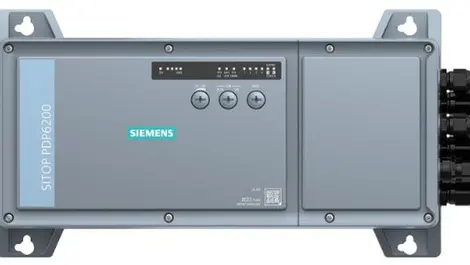
Siemens Digital Industries has unveiled enhancements to its product line, including the Sirius 3RC7 module and Sitop PDP6200, focusing on connectivity and safety.
Bengaluru’s logistics boom is drawing 165-plus exhibitors and 10,000 professionals to a November expo on warehouse automation.
Jaguar Land Rover is modernising its Solihull manufacturing with Ericsson Private 5G, enhancing production efficiency for its Range Rover vehicles.
A skilled labour crunch, weak investment and slow policy change are set to keep Aotearoa New Zealand’s construction sector under strain in 2025.
Tū Ātea is set to launch New Zealand's first commercial Private 5G network at CentrePort, enhancing connectivity for the vital Wellington port operations.
Cheap AI tools are helping small firms cut worksite risks, from forklift collisions to hazardous inspections, while lifting compliance.