

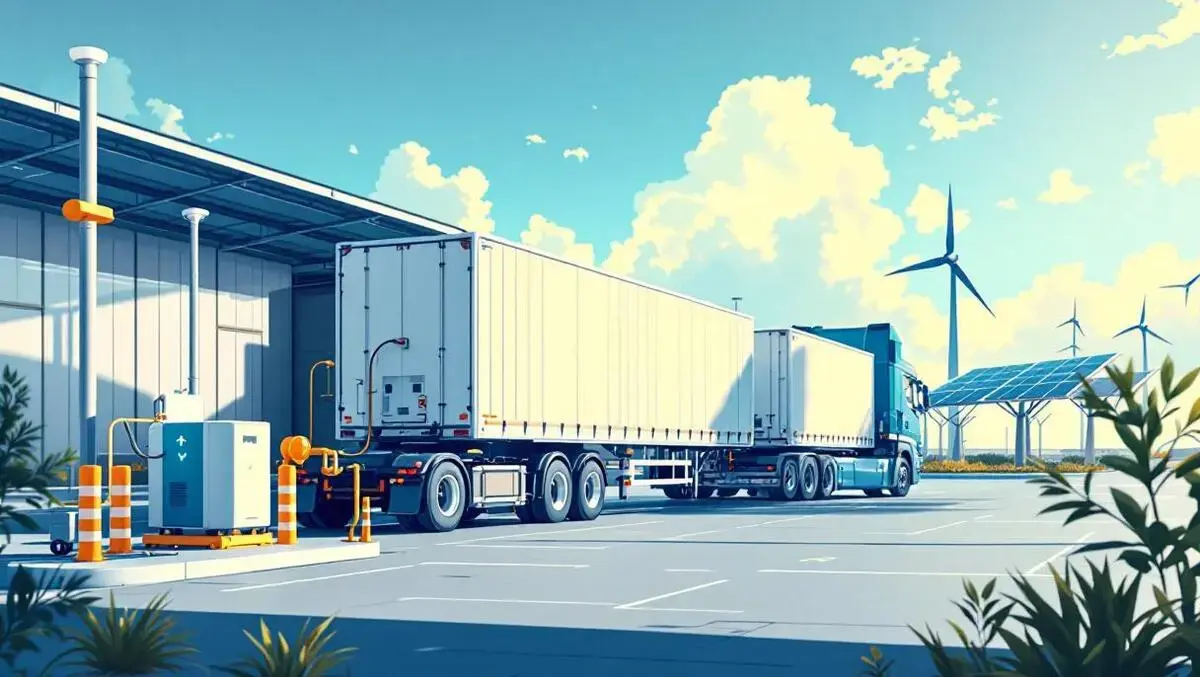
Zenobē pledges AUD $100 million for electric trucks
Thu, 2nd Apr 2026.webp)
Zenobē has committed AUD $100 million to support electric truck adoption in Australia, a move that could help double the number of heavy electric trucks on Australian roads by the end of 2026.
The investment targets heavy commercial vehicles and the charging infrastructure needed to support them, as fleet operators weigh replacement decisions for ageing diesel trucks. About 1,000 heavy electric trucks are currently in service across Australia, while 56% of the national truck fleet is more than 10 years old.
The funding package extends beyond vehicle procurement. It includes charging infrastructure, battery replacements and deployment support, as well as depot assessments, fleet and energy modelling, and tailored proposals for operators considering a shift away from diesel.
Zenobē aims to address the financial and operational barriers that have slowed adoption in the freight sector. It is offering upfront planning work at no cost to operators and says its model is designed to bring the total cost of ownership for electric fleets in line with diesel.
Market shift
The announcement comes as electric truck sales begin to rise from a low base in Australia. Around 500 electric trucks were on track to be sold in 2024, according to Zenobē, exceeding the combined total sold in the previous decade.
Even so, the market remains at an early stage, particularly in heavy vehicles, where charging requirements, depot design and financing structures can make fleet replacement more difficult than in passenger transport. At the same time, operators are making long-term investment decisions as older vehicles near the end of their working life.
Zenobē operates in fleet electrification and battery storage across Australia, New Zealand, Europe, the UK and North America. It supports more than 3,400 commercial electric vehicles across 122 depots globally and is the largest owner and operator of electric buses in Australia, New Zealand and the UK.
Cost focus
Its approach relies on long asset life cycles, access to lower-cost capital and planning charging systems to suit different fleet operations. The structure is intended to reduce the upfront burden that has often made heavy electric vehicles harder to justify commercially.
It also reflects the broader challenge of freight decarbonisation, where operators face pressure to cut emissions but remain sensitive to vehicle costs, downtime and infrastructure constraints. In Australia, those pressures are especially acute for long-haul and heavy-duty fleets, where diesel remains dominant.
The Australian investment forms part of Zenobē's broader target to support up to 4,000 electric commercial vehicles globally by the end of 2026. Alongside fleet electrification, the company also repurposes end-of-life electric vehicle batteries for on-site and portable power applications, including fleet charging and construction sites.
In grid-scale storage, Zenobē has more than 1.2GW of battery storage assets in operation or under construction on the Great Britain transmission network. That broader experience in battery systems and energy infrastructure is becoming increasingly relevant as commercial fleet operators seek integrated charging and energy management rather than vehicle finance alone.
Gareth Ridge, Zenobē's Country Director for Australia and New Zealand, said the commitment reflects decisions now being made by truck operators across the market. "The direction we set in the next five years will define the trajectory for the next two decades," he said.
He said cost parity with diesel remains central to the company's pitch. "Our goal is simple: to make the transition total cost of ownership neutral so the sustainable choice is also the commercial one," Ridge said.