

Scyne tour pushes verified cyber checks for suppliers
Tue, 13th Oct 2026 (Today).webp)
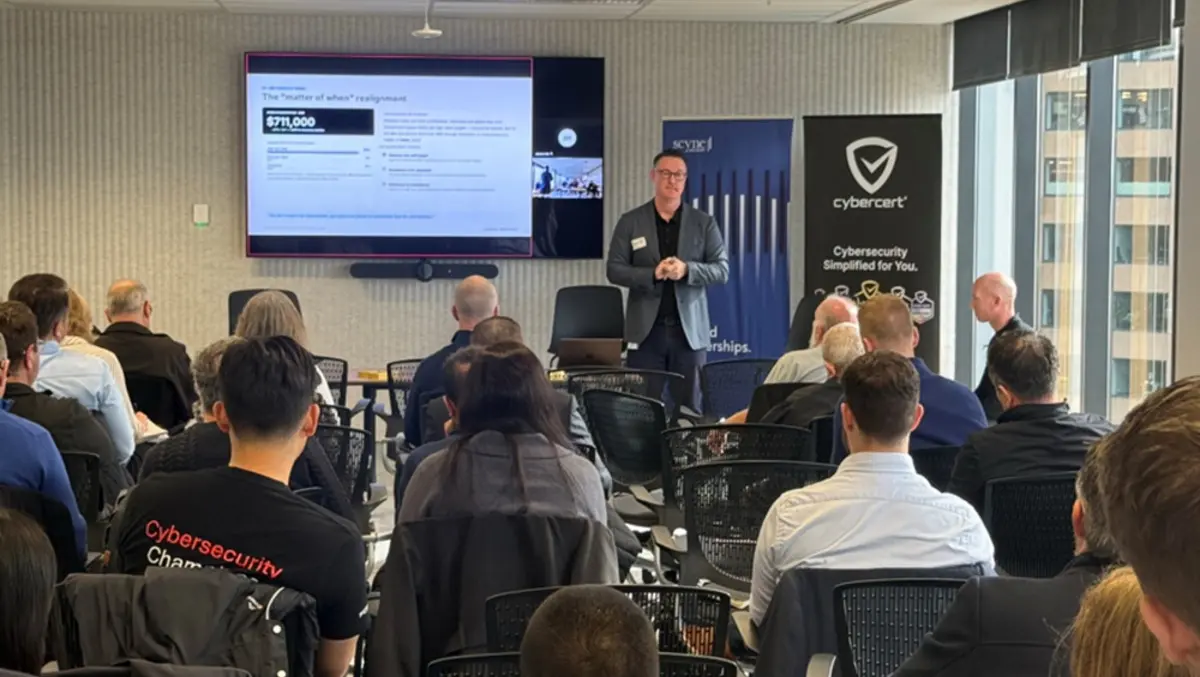
Scyne has completed a national Government Sector Cyber Resilience Summit tour with CyberCert, ending in Perth after events in Sydney, Melbourne, Brisbane and Adelaide.
The meetings brought together cybersecurity leaders from federal, state and local government, along with industry bodies and small business representatives, to discuss risks in public sector supply chains.
Central to the discussions was the exposure created when government agencies depend on thousands of small and medium-sized businesses to deliver public services. The events focused on the risk that a cyber breach at a supplier can disrupt services and provide a route into government systems.
Speakers also examined the use of security questionnaires in procurement and vendor reviews. Discussions favoured replacing self-declared assessments with independently verified assurance through SMB1001 certification.
Scyne said the sessions explored practical security steps that smaller suppliers can adopt without significant friction. The aim was to give buyers verified risk information that can feed directly into procurement decisions.
Supply chain focus
The public sector has become increasingly reliant on outside providers for digital services, operational support and specialist expertise. That model can widen the attack surface, particularly when smaller suppliers have fewer resources to manage cyber threats.
The summit centred on third-party risk rather than only agencies' internal defences. Organisers said attackers often target weaker suppliers to gain access to larger organisations and critical systems.
Independent verification was a central theme across the tour. Rather than relying on static declarations from vendors, discussions highlighted certification as a way to give government buyers clearer evidence of a supplier's security posture.
Industry backing
Fortinet, LastPass, MyCISO, Cyber Wardens and Coalition Insurance contributed to the stage programme. Their involvement pointed to a broader effort by security vendors, advisers and insurers to shape how government and smaller businesses address supply chain exposure.
The inclusion of small business advocates also highlighted a practical issue in cyber policy: governments may seek stronger safeguards from suppliers, but those requirements must be workable for smaller firms without large compliance teams.
That tension between assurance and administrative burden has become more prominent as cyber requirements spread through procurement frameworks. For many agencies, the challenge is to gain better visibility over supplier risk without creating lengthy processes that exclude smaller providers from public contracts.
Scyne said the events were designed to address that gap by promoting a model that combines verification with lower-friction controls for suppliers. It added that public sector organisations are seeking greater visibility over both their internal security posture and the position of third parties in their supply chains.
Government exposure
The issue has implications beyond technology procurement. A successful breach affecting a contractor can interrupt services used by communities, delay public administration and increase pressure on agencies responsible for continuity of essential operations.
That makes third-party cyber risk a governance issue as well as a technical one. It also places greater emphasis on how agencies assess vendors before contracts are signed and monitor suppliers once services are in operation.
By taking the summit to five cities, Scyne and CyberCert reached a broad cross-section of Australian public sector stakeholders. The route through Sydney, Melbourne, Brisbane, Adelaide and Perth suggests an effort to engage agencies and supplier networks across several major government and business centres.
The discussions also indicated a shift from awareness to evidence. Rather than asking suppliers to describe their controls in questionnaires alone, the model promoted through the tour was based on verified information that procurement teams can use in contract and risk decisions.
With contributions from Fortinet, LastPass, MyCISO, Cyber Wardens and Coalition Insurance, the summit underscored that securing the public sector supply chain requires collective capability-building across agencies and industry.