

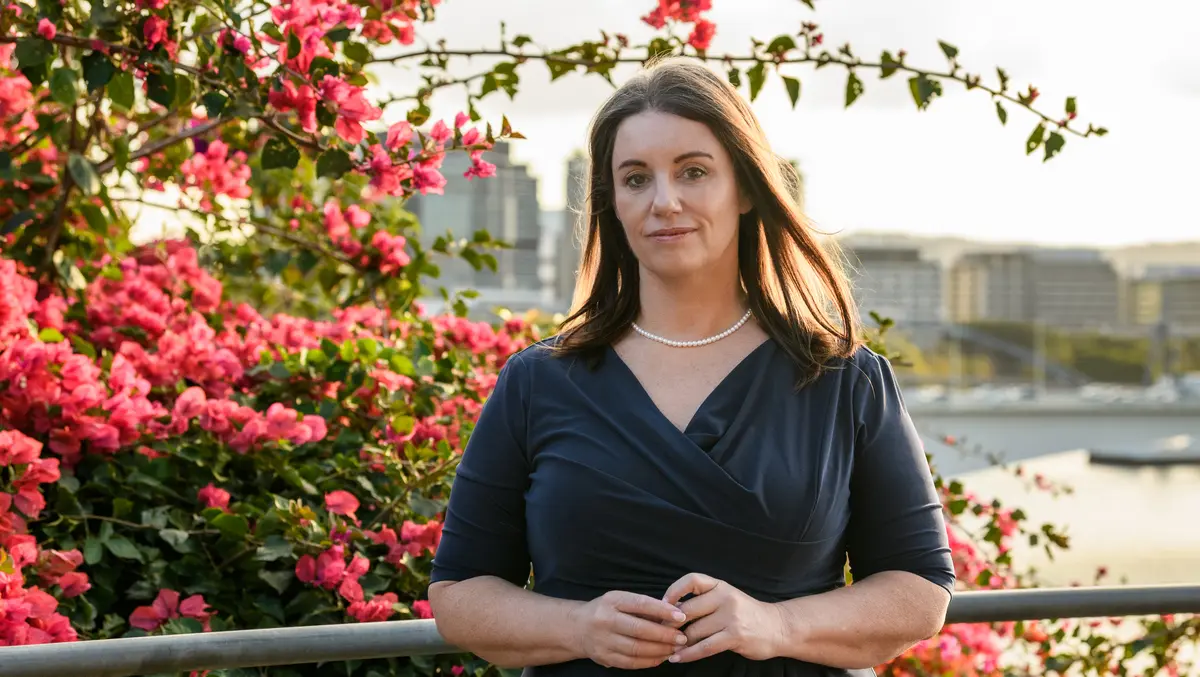
Ruby O'Rourke launches SAFE for child safety in Australia
Wed, 5th Aug 2026
Ruby O'Rourke has launched SAFE for child care centres and other child-facing services across Australia. The platform was developed over 12 years.
SAFE is designed to help organisations identify children who may be at risk by collecting routine behavioural observations and analysing them as patterns over time. It uses machine learning and natural language processing to assess signs such as withdrawal, changes in appetite, unexplained fears and altered attendance patterns that may not raise concern when viewed as isolated incidents.
O'Rourke founded the system after surviving severe abuse as a child. Details released alongside the launch state that she was subjected to forced adoption, sustained violence and a near-fatal attack by her father when she was 10. She was left by a river in Melbourne and revived by passers-by.
She has said that throughout her childhood, her distress was visible in behaviour changes, drawings, withdrawal and silence, but no adult connected those signs into a wider picture. That experience became the basis for a project aimed at creating an earlier warning process for children who cannot clearly articulate abuse.
According to SAFE, the platform has been trained on more than 68,900 real child safety concerns and recorded a 97 per cent accuracy rating in government pilots. Its existing records cover children in every state and territory, and its user base spans early childhood, community, government and other child-facing settings.
How it works
The system gives educators and carers a structured way to log ordinary observations that might otherwise remain scattered across separate notes or internal records. It then assesses those observations collectively over time and, where relevant, across locations, with the aim of surfacing cases that may need closer attention before a formal report would usually be made.
The launch comes amid wider scrutiny of child protection arrangements in Australia, particularly in child care. O'Rourke argues that existing systems still rely too heavily on fragmented reporting, threshold-based intervention and retrospective assessment after harm has already escalated.
Research cited by SAFE points to a broader challenge in safeguarding young children. Trauma specialists have long noted that children often communicate distress through behaviour before they can explain it in words, creating a gap between what adults observe day to day and what formal child protection systems are designed to recognise.
O'Rourke developed SAFE in partnership with CSIRO/National ICT Australia, the University of Queensland and the Child Abuse Prevention Service. The project took 12 years to build, reflecting both the complexity of child safeguarding systems and the difficulty of turning informal observations into a consistent assessment process.
Founder account
O'Rourke described the launch as a response to a long-standing structural problem in how adults are expected to identify risk in children.
"We have built a world where frontline educators are expected to spot danger one incident at a time, when children are communicating it in patterns, in the only language available to them.
"I do not blame the adults who missed what was happening to me. They were doing what they had been trained to do, which was to look at individual incidents in isolation. The system they were operating within was never designed to connect those incidents into a picture, and children paid the price for that design failure for generations.
"A systems-led approach to early warning infrastructure is what I needed as a child, and it is what children across this country still need today. We have already built extraordinarily sophisticated infrastructure like this for almost every other category of national risk - systems that detect financial fraud in real time, that model bushfire spread, that flag aviation anomalies before they become disasters.
"And yet for children, we have continued to rely on fragmented notes, overworked carers and educators, and the hope that someone will notice in time. So SAFE is my answer to all of this.
"After everything I lived through, building something that might have changed my own childhood, and that will change the childhoods of children we will never meet, is the most important work I have ever done," said Ruby O'Rourke, Founder, SAFE.
O'Rourke argues that child protection has lacked the kind of early warning infrastructure used in fields such as fraud detection, aviation safety and disaster management. In those sectors, risk is monitored through patterns and signals; in child safeguarding, it often still depends on individual judgement applied to separate incidents.
For child care providers, the commercial and operational context is also shifting. Rising regulatory scrutiny has increased pressure on operators to show not only compliance with reporting obligations, but also stronger internal processes for identifying concerns before they become acute.
SAFE's current footprint includes organisations across early childhood, community and government settings, with scope to extend to schools, sport and broader human services. The platform now holds assessment records for more than 68,900 children across every state and territory, according to the organisation.