

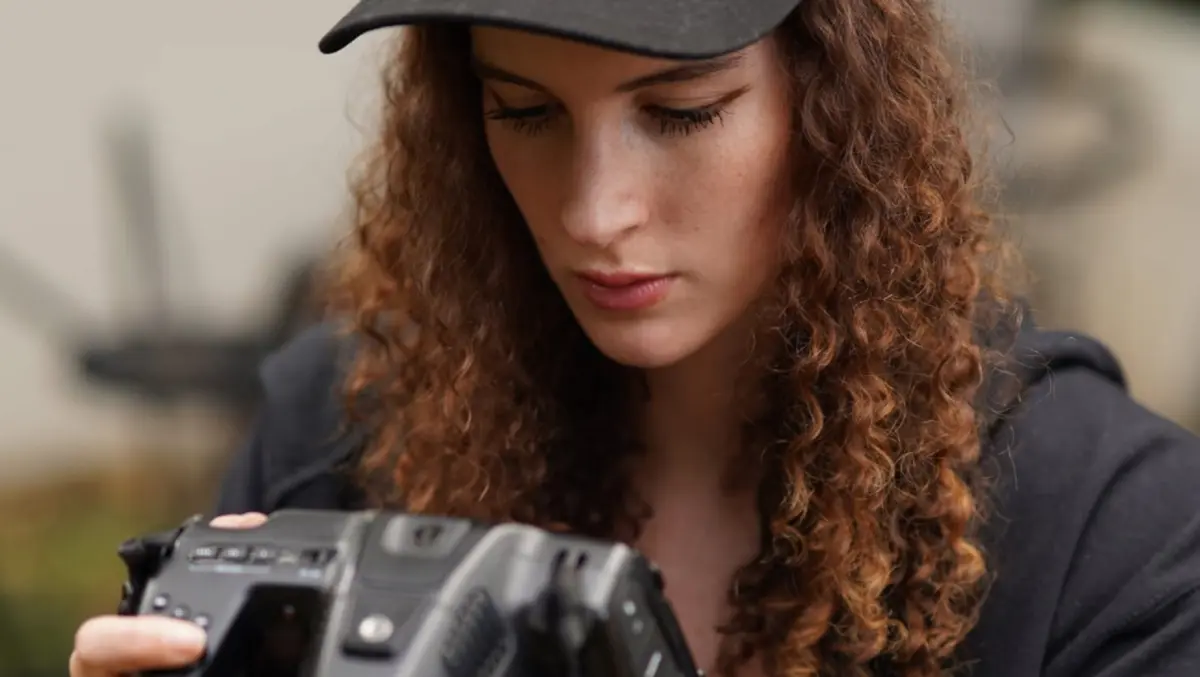
Emilie Lowe's short film wins praise for cinematography
Wed, 29th Jul 2026
Australian filmmaker Emilie Lowe used Blackmagic Design cameras and DaVinci Resolve Studio to make her 35-minute short film Where Dead Things Grow, which has received festival recognition for its cinematography.
Lowe wrote, directed, shot and edited the project with a crew of five in regional Western Australia. Set in a post-apocalyptic rural landscape, it follows a man living alone after the loss of his family before he finds an unexpected companion.
The production relied on a small-scale workflow and extensive natural light. Lowe used Blackmagic Pocket Cinema Camera 6K Pro cameras with cine and Sigma lenses, aiming for a shallow depth of field and a close visual connection to the central character.
She said the visual choices were closely tied to the story's emotional arc.
"I try to make each frame mean something," Lowe said. "Even if it is a simple shot, it needs to contribute to the character's journey. The film is about finding light in the darkness, and I wanted that to come through not just in the story, but in the way it was shot and graded."
Visual approach
The film's look shifts as the narrative develops. Early scenes were shot and graded with a muted palette to reflect grief and isolation, while later sections introduce stronger colour as the character's circumstances change.
Lowe also filmed the same location across winter and spring to show seasonal change on screen. That gave the production a way to mark the movement from emotional bleakness to a more hopeful tone without relying on exposition.
Post-production played a central role in shaping that transition. Lowe used DaVinci Resolve Studio for both editing and grading, keeping the workflow under her control from shoot to final picture.
"I love color grading because it allows you to tell the story in a different way," Lowe said. "With DaVinci Resolve Studio, I could shape the mood and show that transition from darkness into something more hopeful. It is one of the most powerful tools in the process."
Lean production
Shooting in Western Australia brought practical difficulties, especially for exterior scenes during winter storms and periods of rapidly shifting daylight. Lowe said the built-in ND filters in the Pocket Cinema Camera 6K Pro helped the crew respond quickly while maintaining visual consistency.
The film was shot using handheld and tripod-based setups rather than stabilised camera systems. Lowe said that supported a more immediate, less polished feel that matched the story's emotional register.
"The cameras are very practical and 'hands on', which is exactly what I want as a cinematographer," Lowe said. "You are in full control of focus and exposure, and that physical connection to the camera is part of the filmmaking process for me. It helps create something that feels raw and real."
With a crew of five, each production choice had to serve more than one purpose. Equipment needed to remain manageable on location, while the image still had to carry a film centred on mood, isolation and subtle character shifts.
That stripped-back approach reflects a wider trend in independent filmmaking, where lower-cost digital cinema cameras and integrated post-production tools have allowed directors to take on multiple roles. For Lowe, that meant combining the work of writer, director, cinematographer and editor on a single project.
The naturalistic style extended to camera movement. Rather than smoothing out every shot, the production retained slight imperfections to keep the audience close to the character's perspective.
"We were filming outdoors in conditions that could change very quickly," Lowe said. "Being able to adjust ND internally saved time and helped us stay focused on performance and composition rather than constantly adjusting gear."
The film has earned festival recognition, including awards for cinematography. Its reception has drawn attention to Lowe's work as a filmmaker operating outside a large studio structure and using a compact production model.
For Lowe, the technical choices remained secondary to the piece's emotional intent. "It is not meant to feel overly polished," she said. "There is a slight imperfection to it that makes it more intimate, like you are experiencing the moment with the character."