


Woolworths & Coles top AI grocery visibility in Australia
Mon, 4th May 2026
Jaywing analysis found Woolworths and Coles lead AI brand visibility in Australia's grocery and food retail category, while Amazon remained the most visible retailer across most other categories in the study.
The research examined which retailers and brands appear in AI-generated shopping answers across electronics, fashion and apparel, health and beauty, hobbies and recreational goods, home and living, and books, stationery and multimedia. It assessed factors including search intent, funnel stage, content format and brand presence in tools such as ChatGPT and Google's AI-driven search results.
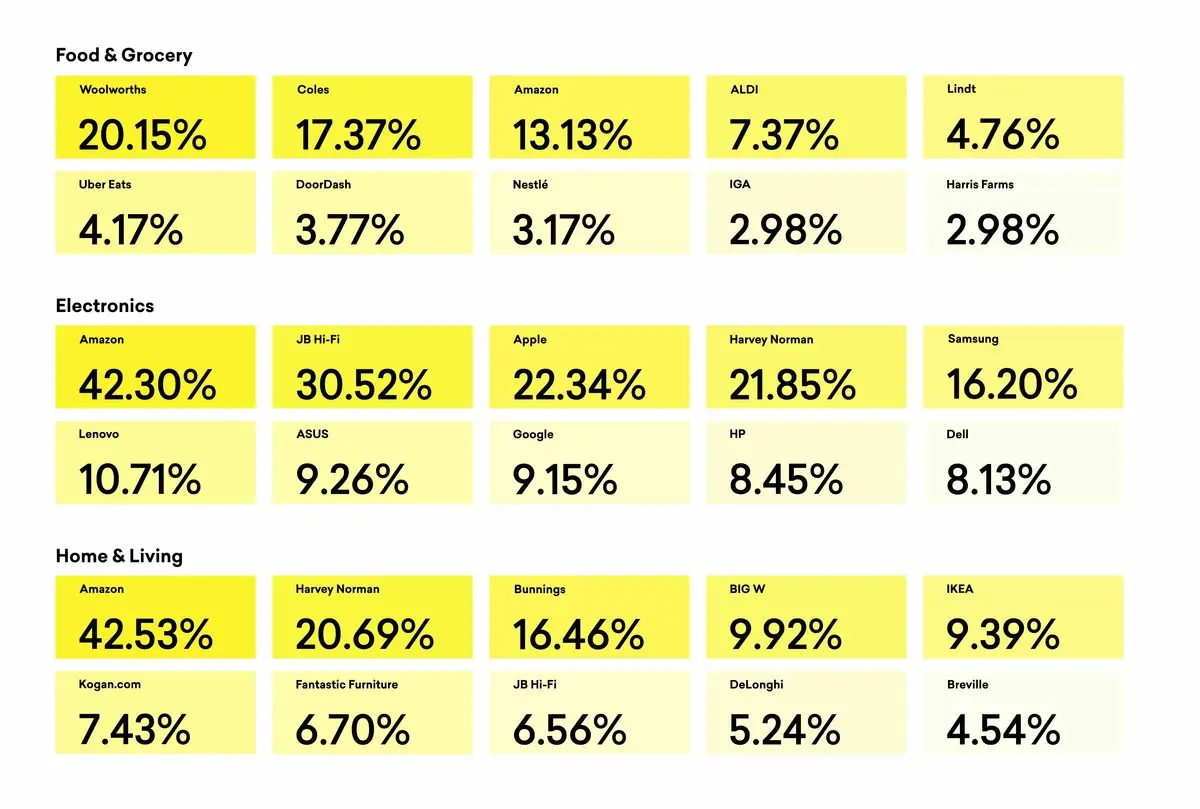
In grocery and food, Woolworths ranked first with 20% of AI brand visibility, followed by Coles on 17%. Amazon placed third on 13%, with Aldi fourth on 7%.
Amazon led in six major retail categories covered by the analysis. In electronics, it held 42% of AI visibility, ahead of JB Hi-Fi on 31% and Harvey Norman on 22%, showing Australian chains still hold significant ground in a category where the US group has a strong presence.
Category split
Health and beauty was more mixed. Amazon accounted for 25% of visibility, while Chemist Warehouse had 21% and Priceline 8%.
The study also found specialist skincare brands maintained a presence despite the scale of larger retailers. CeraVe recorded 7% visibility and The Ordinary 6.5%, suggesting focused brands can still appear prominently in AI answers.
Home and living was competitive and fragmented, with Harvey Norman leading on 21% and Bunnings following on 17%.
Appliance makers also appeared among the most visible names in home and living searches. DeLonghi and Breville each recorded 5%, placing both brands in the category's top 10.
Buying intent
The analysis suggests AI search is already being used for shopping decisions rather than general browsing. Nearly 70% of retail-related AI queries showed clear commercial or transactional intent, while more than half sat in the mid-funnel consideration stage, when shoppers compare options and narrow their choices.
That matters because AI-generated answers can reduce the number of brands a shopper sees. Instead of a conventional search page with a long list of links, AI systems often return a shorter response citing a limited set of brands, retailers or sources.
Tom Geekie, chief executive of Jaywing, said AI search has become a critical layer in product discovery.
"AI search has already become a critical layer in how people discover products and consumers are asking complex questions and expecting direct recommendations, which means the AI engine effectively decides which brands enter the conversation," he said.
Geekie said this changes the competitive dynamic for retailers and consumer brands seeking online visibility.
"This is a fundamental shift from traditional search and no longer about ranking number one for a keyword, but about being one of the few sources an AI model chooses to cite and summarise.
"If a brand is not present in the sources AI trusts and references, it simply does not appear in the answer. That means losing visibility even when consumers are actively looking to buy. Retailers and brands investing in Generative Engine Optimisation will have a real opportunity to shape how AI systems describe, recommend and prioritise them," he said.
The findings point to growing competition between international marketplaces, domestic chains and specialist brands over a new form of discoverability. Grocery appears to be the clearest example of local incumbents retaining an edge, with Woolworths and Coles ahead of Amazon in AI responses tied to food and supermarket shopping.
By contrast, categories with broader online assortments and stronger marketplace dynamics continue to favour Amazon. Electronics remains one of its strongest areas, although the presence of JB Hi-Fi and Harvey Norman suggests local retailers are still highly visible when consumers ask AI tools for product guidance.
The report drew on search data from Writesonic and used a framework that assessed search intent, funnel stage distribution, the presence of AI shopping features, the content formats cited in AI answers, the most frequently cited domains and brand visibility across AI platforms.